


Baby teeth hold the path for adult teeth. They hold space, help a child chew and speak, and early loss, not every loose tooth, is what needs a check. When one is gone before that adult tooth is ready, neighboring teeth can drift into the gap. In the chair I check whether the permanent tooth is close. If not, the next step is a space maintainer conversation with the pediatric team so crowding is not the only later option.
What Are Primary Teeth?
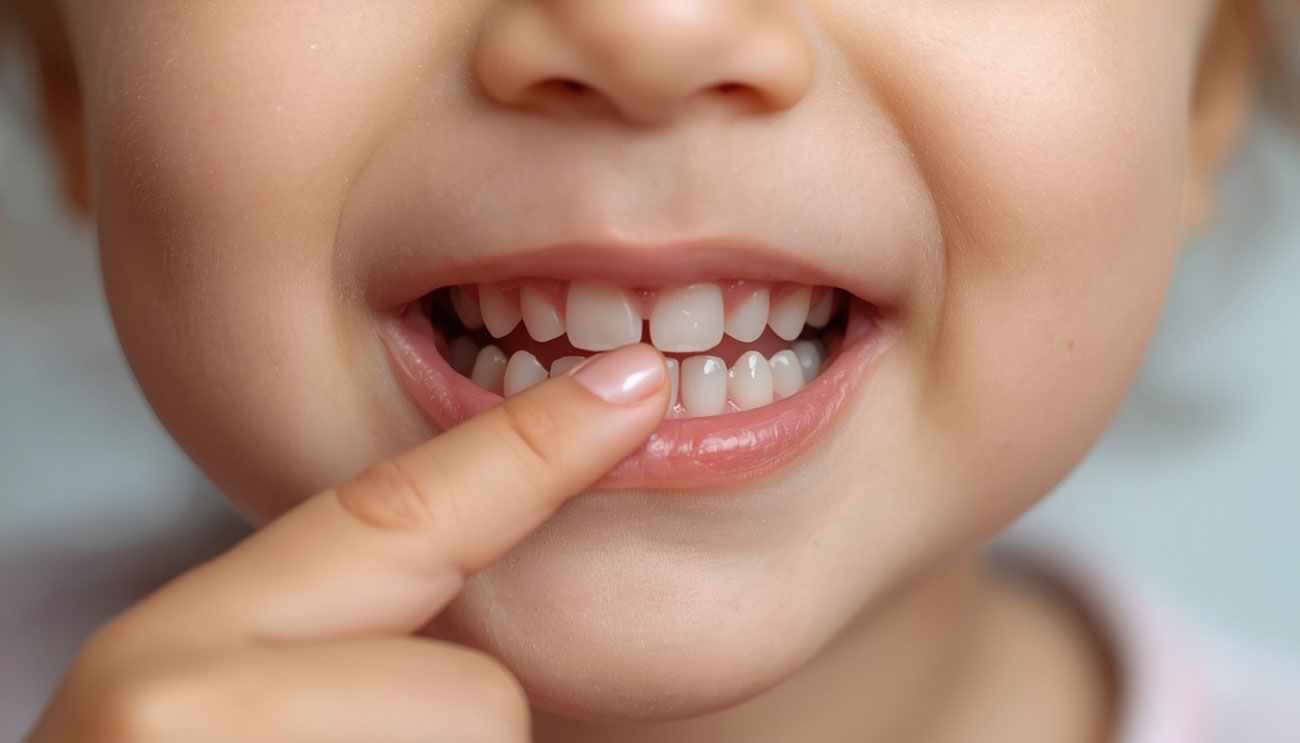
Primary teeth are the first set of twenty teeth a child grows, and they are already waiting in the jaws at birth. A parent will often mention a lower front tooth wiggling at breakfast, and that is usually the first sign the adult teeth are starting their push. You might notice the first ones arriving as extra drooling and fussiness, or you might not notice at all until a small white edge appears on the lower gum. Babies are born with all twenty primary teeth already in their jaws, and the first ones tend to break through around six months, typically the lower front. By age three, most children have all twenty, ten on top and ten on bottom. Those teeth do real work. They let a child chew solid food, form clear speech, and hold the space the adult teeth will eventually fill. Regular pediatric dentistry visits track all of that as your child grows, and you can read the full timeline in the MouthHealthy guide to baby teeth.
When Do Kids Lose Their Baby Teeth?
Most children start losing baby teeth around age six, when the adult teeth underneath begin pushing the primary ones out. I see a six-year-old who will not bite a sandwich on one side because a front tooth is hanging by a thread, and that hesitation is completely normal. The lower front teeth are usually first to go, followed by the upper front, then the molars farther back. Some children lose their first tooth at five and others not until seven, and both can be perfectly on schedule. The whole process stretches from about age six into the early teens, with the permanent teeth arriving in a fairly predictable order. A loose tooth that takes a few weeks to finally let go is not a problem on its own. What matters is that the adult tooth is behind it, ready to come through. Keep brushing the area gently and let the tooth fall on its own schedule rather than pulling it before it is ready.
What Happens If A Baby Tooth Comes Out Too Early?
Early loss becomes a concern when the adult tooth underneath is not ready to come through yet. A gap that looks closed in a photo before the adult tooth shows is often the first clue that neighboring teeth have already started shifting. Three situations call for different responses.
(1) A tooth that loosens on schedule because the adult tooth is pushing is one you can let go and keep brushing, since the replacement is right behind it.
(2) A tooth lost years early from a cavity or injury, when the adult tooth is not close, is when a space maintainer becomes the conversation, because holding that space open prevents crowding later.
(3) A knocked-out or badly moved tooth is an emergency visit the same day, and that kind of injury may call for emergency dental treatment to assess the surrounding teeth and bone. The goal in every case is to figure out whether the permanent tooth is close enough to take over, or whether something needs to hold the space until it is.
Do Cavities In Baby Teeth Really Matter?
Cavities in baby teeth matter because those teeth are still in active use, and the same cavities and tooth decay that affect adult teeth can reach the nerve and threaten the permanent tooth developing underneath. A child who flinches when a cold drink hits a back molar is often sitting with decay that has been quietly growing, and by the time it hurts, the cavity is already deep. Baby teeth lost to cavities can threaten the health of permanent teeth, which is why we watch small spots closely instead of waiting for pain. A filling on a primary molar is not over treatment. It buys time for that tooth to do its job until the adult molar is ready. At a checkup, the team looks for white spots along the gumline, because those are the earliest signs before a cavity has a chance to deepen. The same habits that protect adult teeth apply to these teeth as well. For children three to six, use a pea-sized amount of fluoride toothpaste, brush twice daily, and supervise. Keep up with regular checkups so small problems stay small.
How Do Primary Teeth Shape The Adult Smile?
Each primary tooth holds a specific spot in the arch, and that spot is what the permanent tooth relies on when it is ready to come through. I have fitted a thin metal loop that holds a molar space on a child who lost that tooth too soon, and when the adult molar was finally ready, it came through where it belonged because the space was still open. When primary teeth stay in place for their full term, the permanent teeth underneath have a clear path. When they do not, the teeth on either side drift, the arch narrows, and the adult teeth that follow come in rotated or blocked. That is where orthodontics comes in, not as a punishment for early loss but as a correction for crowding that started long before braces went on. A child whose baby molars stayed until the right time often needs less orthodontic work later, because the adult teeth had room to arrive. Habits like prolonged thumb sucking can also push front teeth forward and change that path, and you can read more about how thumb sucking affects teeth alignment to understand when that pattern becomes a concern. The earlier a child is seen, the more options there are to guide growth instead of undoing it later.
Questions Parents Ask Us
How many baby teeth should my child have?
Children have twenty baby teeth, ten on top and ten on bottom, and most have all twenty by age three. The first teeth usually break through around six months, starting with the lower front. If your child is past three and still missing several, a visit lets us check whether the teeth are simply slow or whether something is blocking them.
Should I still brush a loose baby tooth?
Yes, keep brushing it gently. A loose tooth still has roots partially attached, and the gum around it can collect food and plaque. Use a soft brush and clean the area without forcing it. If the tooth is hanging and bleeding, a piece of gauze and a gentle wipe will do more than a hard scrub. The goal is to keep the tissue healthy while the tooth finishes letting go.
Does every early lost tooth need a space maintainer?
No, not every one. If the adult tooth is close to breaking through, the body handles the transition on its own. A space maintainer becomes the conversation when the permanent tooth is still years away, because the teeth on either side will drift into the gap and close the space the adult tooth needs. That is a decision I make after looking at an x-ray, not a guess.
What if a baby tooth is knocked out on the playground?
Call the same day. The surrounding teeth, gums, and bone need to be checked for injury. If the tooth is pushed sideways or up into the gum rather than fully out, that is also urgent. Rinse your child’s mouth gently.
When You Are Ready
If your child has a loose tooth that seems early, a gap that closed before you expected, or a back tooth that has been sore, call (281) 376-2706. Families in Spring, along with Cypress, Tomball, and The Woodlands, share the same office and the same team. A short visit answers your questions and shows you what comes next.